


Biodegradable bags are bags that are capable of being decomposed by bacteria or other living organisms. Each year approximately 500 billion to 1 trillion plastic bags are used worldwide.
Benefits of Biodegradable Bag
Reduction In Carbon Emissions
Unique biodegradable material is made from PLA bioplastic. As this is plant-based, the manufacturing process produces far fewer carbon emissions than traditional plastic. While traditional plastic releases four tons of emissions, biodegradable bag emit only 0.8 tons of carbon – a 500% reduction!
Waste Reduction
As biodegradable bag break down over time, this means there is a large reduction in the volume of waste being created which means less waste ending up in landfill. With less wastage taking up space in landfills, the outcome is less overall waste to manage. Saving land for other purposes and preserving the beauty of our planet.
Repurposing & Recycling
The oils that come from plants make bioplastics far superior materials compared to traditional plastic types. The oils make the surface of bioplastics more malleable and less brittle so that it's easier to form new shapes and textures.
They are just as moldable as traditional plastics and can be turned into various appealing ways to suit your requirements. In addition to this, they can also be recycled and repurposed multiple times in their life cycle.
Compare this to some non-biodegradable plastics, they are not safe for repurposing because some materials can leak toxic, dangerous chemicals that may leak after the first use. Since biodegradable bags and packaging come from natural materials found in nature, there are no dangerous chemicals or toxins in these items.
Reduced Pollution
As biodegradable products break down naturally, they eventually decompose and are consumed by soil and other natural components. This natural process means no forced chemical reaction needs to take place to kickstart the process and less pollution will happen as a result.
Given that they take a lot less time to decompose than traditional plastics, they are easy to recycle, that's too without releasing toxic elements.
Non-Toxic
Biodegradable bags are made from natural materials which means that they are safer for users.
Traditional plastics are made with harmful by-products and chemicals which are a threat to the environment and life as well. They are likely to emit these harmful substances during the breakdown process. What's more, the plastic used for most standard water bottles, PET, can attract harmful bacteria or even leak chemicals.
But this is not a case with biodegradable plastic, further supporting the case for biodegradable bag. They are safe and don't release toxins during their breakdown process. They are absorbed by the soil.
Less Petroleum
Biodegradable bag also minimises the use of petroleum supplies. Traditional plastic is manufactured by oil molecules being heated and treated to convert into polymers.
Nearly 2.7 per cent of a country's petroleum is used in the traditional plastic manufacturing processes.
Biodegradable plastics, on the other hand, are made using natural materials such as sugar cane, corn, orange peels, starch, and plants. This process requires far less energy and usually does not involve the burning of fossil fuels.
Therefore, this means that the amount of biodegradable bag that can be manufactured is much higher while simultaneously using far less energy. So, as well as using less precious resources, there is less pollution being produced. By reducing the production of traditional plastics and making more biodegradable bag instead, we can reallocate oil resources to other causes like heating and transport.
-
![Compostable Plastic Bags]() Compostable Plastic Bagscompostable bag 13 gallon are used for the collection of waste scraps, food scraps for home or community composting..read more
Compostable Plastic Bagscompostable bag 13 gallon are used for the collection of waste scraps, food scraps for home or community composting..read more -
![Biodegradable T Shirt Bag]() Biodegradable T Shirt BagMade from corn starch raw materialColor:White or CustomizedCompostable and biodegradableread more
Biodegradable T Shirt BagMade from corn starch raw materialColor:White or CustomizedCompostable and biodegradableread more -
![Compostable Trash Bags]() Compostable Trash Bagscompostable bag 13 gallon are used for the collection of waste scraps, food scraps for home or community composting..read more
Compostable Trash Bagscompostable bag 13 gallon are used for the collection of waste scraps, food scraps for home or community composting..read more -
![Biodegradable Plastic Refuse Bags]() Biodegradable Plastic Refuse BagsMade from corn starch raw materialColor:White or CustomizedCompostable and biodegradableread more
Biodegradable Plastic Refuse BagsMade from corn starch raw materialColor:White or CustomizedCompostable and biodegradableread more -
![Biodegradable Plastic Rubbish Bags]() Biodegradable Plastic Rubbish BagsMade from corn starch raw materialColor:White or CustomizedCompostable and biodegradableread more
Biodegradable Plastic Rubbish BagsMade from corn starch raw materialColor:White or CustomizedCompostable and biodegradableread more -
![Biodegradable Plastic Lunch Bags]() Biodegradable Plastic Lunch BagsMade from corn starch raw materialColor:White or CustomizedCompostable and biodegradableread more
Biodegradable Plastic Lunch BagsMade from corn starch raw materialColor:White or CustomizedCompostable and biodegradableread more -
![Biodegradable Plastic Bags Large]() Biodegradable Plastic Bags Largebiodegradable plastic bags large are used for the collection of waste scraps, food scraps for home or community composting..read more
Biodegradable Plastic Bags Largebiodegradable plastic bags large are used for the collection of waste scraps, food scraps for home or community composting..read more -
![Biodegradable Plastic Kitchen Bags]() Biodegradable Plastic Kitchen Bagsbiodegradable plastic kitchen bags are used for the collection of waste scraps, food scraps for home or community composting..read more
Biodegradable Plastic Kitchen Bagsbiodegradable plastic kitchen bags are used for the collection of waste scraps, food scraps for home or community composting..read more -
![Bio Plastic Garbage Bags]() Bio Plastic Garbage Bagsbio plastic garbage bags are used for the collection of waste scraps, food scraps for home or community composting..read more
Bio Plastic Garbage Bagsbio plastic garbage bags are used for the collection of waste scraps, food scraps for home or community composting..read more -
![Biodegradable Plastic Green Bags]() Biodegradable Plastic Green Bagscompostable bag 13 gallon are used for the collection of waste scraps, food scraps for home or community composting..read more
Biodegradable Plastic Green Bagscompostable bag 13 gallon are used for the collection of waste scraps, food scraps for home or community composting..read more -
![Biodegradable Plastic Grocery Bags]() Biodegradable Plastic Grocery BagsMade from corn starch raw materialColor:White or CustomizedCompostable and biodegradableread more
Biodegradable Plastic Grocery BagsMade from corn starch raw materialColor:White or CustomizedCompostable and biodegradableread more -
![Biodegradable Plastic Garbage Bag]() Biodegradable Plastic Garbage Bagbiodegradable plastic garbage bag are used for the collection of waste scraps, food scraps for home or community composting..read more
Biodegradable Plastic Garbage Bagbiodegradable plastic garbage bag are used for the collection of waste scraps, food scraps for home or community composting..read more


Why Choose us
Rich Experience
Our company has many years of production work experience. The concept of customer-oriented and win-win cooperation makes the company more mature and stronger.
High Quality
Our products are manufactured or executed to very high standards, using the finest materials and manufacturing processes.
One-stop Solution
With rich experience and one-to-one service,we can help you choose products and answer technical questions.
Competitive Price
We have professional sourcing team and cost accounting team, stive to reduce cost and profit and provide you a good price.
What Are The Prominent Types Of Biodegradable Bags?
Biodegradable Plastic Bags
Biodegradable plastic bags have the quality to biodegrade faster than regular plastic bags. They are often made from plant-based materials. These materials include cornstarch or sugarcane. These materials are compostable under certain climatic conditions.
Compostable bags break down in a composting environment. In the end, it turns down into nutrient-rich soil. These bags are often made from plant-based materials. These materials include cornstarch and sugarcane. These materials make these bags a popular choice for eco-conscious consumers.
Bioplastic Bags
Bioplastic bags are made from renewable biomass sources such as vegetable fats and oils. Leading manufacturers get renewable biomass from vegetable fats and oils. They use this biomass to manufacture bioplastic bags. Some manufacturers even use corn starch and pea starch. These bags have properties like those of traditional plastic. Yet, they biodegrade faster under certain conditions. These conditions may include high temperatures or exposure to UV light.
Paper Bags
While not technically biodegradable, these bags are a better alternative to plastic. They are made from renewable resources. They are recyclable and compostable. Paper bags are often used for packaging and shopping bags and can be eco-friendly.
Biodegradable Plastic Bags
Biodegradable plastic bags have the quality to biodegrade faster than regular plastic bags. They are often made from plant-based materials. These materials include cornstarch or sugarcane. These materials are compostable under certain climatic conditions.
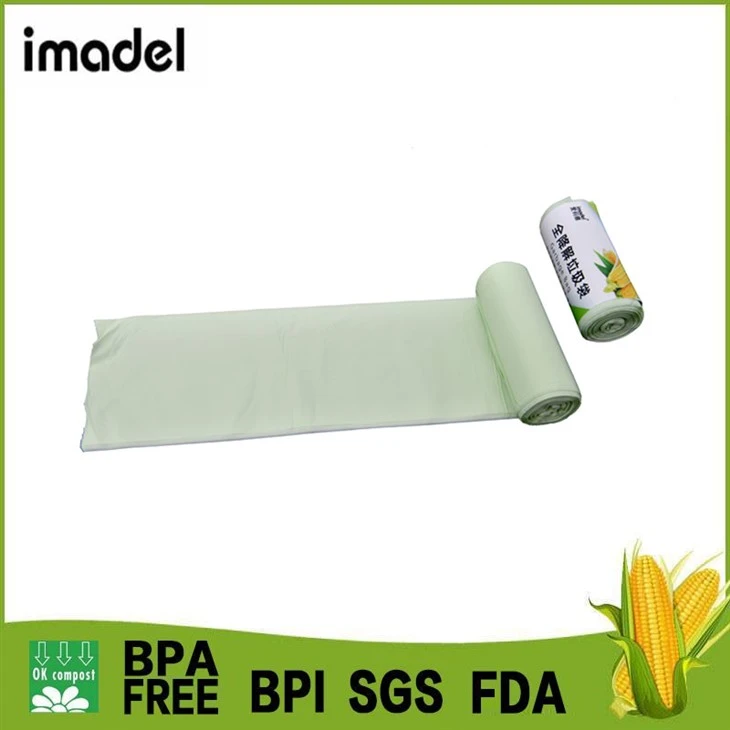
Biodegradable plastics take three to six months to decompose fully. That's much quicker than synthetic counterparts that take several hundred years. Exactly how long a biodegradable bag takes to break down depends on various factors, such as temperature and the amount of moisture present.
But the bags aren't always as environmentally friendly as they seem. They're made from similar petrochemical-based materials to conventional plastic, only with compounds added that cause them to disintegrate gradually in the presence of light or oxygen. They often then degrade into a sludge of toxic chemicals.
Bioplastics made of cornstarch and other plant-based materials are a better bet. They give off CO2 as they decompose, but they're merely expelling carbon locked in by the plant matter that originally formed them. The net effect on the environment is therefore close to zero.
Commonly Used Materials For Biodegradable Bag
PBAT
PBAT is a thermoplastic biodegradable plastic. It is a copolymer of butylene adipate and butylene terephthalate. It has the characteristics of PBA and PBT. It has both good ductility and elongation at break, as well as Good heat resistance and impact performance; in addition, it also has excellent biodegradability, which is very active in the research of biodegradable plastics and one of the best degradable materials for market applications.
Characteristic:
PBAT is a semi-crystalline polymer, usually the crystallization temperature is around 110°C, the melting point is around 130°C, and the density is between 1.18g/ml~1.3g/ml. The crystallinity of PBAT is about 30%, and the Shore hardness is above 85. PBAT is a copolymer of aliphatic and aromatic, which combines the excellent degradation performance of aliphatic polyester and the good mechanical properties of aromatic polyester. The processing performance of PBAT is very similar to that of LDPE, and the film can be blown with LDPE processing equipment.
PLA
Polylactic acid (PLA) is a new type of biodegradable material, made from starch raw materials proposed by renewable plant resources (such as corn). It has good biodegradability. After use, it can be completely degraded by microorganisms in nature, and finally carbon dioxide and water are generated without polluting the environment. This is very beneficial to environmental protection and is recognized as an environmentally friendly material.
The degradation of PLA is divided into two stages:
1) First, it is purely chemically hydrolyzed into lactic acid monomer;
2) The lactic acid monomer is degraded into carbon dioxide and water under the action of microorganisms. The food cup made of polylactic acid can be completely degraded in only 60 days, which truly achieves the dual effects of ecology and economy.
Polyrocks chemical biodegradable bag blown film modified material
DEG-101A is a kind of PBAT/PLA modified blown film material that can be degraded by industrial compost. It has no non-degradable organic components and can be processed on various types of blown film machines, printing machines, bag making machines, and sealing machines, etc. Compared with the DEG-100 series, the membrane material processed by it is relatively hard, relatively hard to deform after being loaded, and has improved transparency.
Main application: Express outer packaging biodegradable bag and shopping biodegradable bag, etc.
Even the best bio-plastics can have their downside. When sent to landfill, even the best bioplastics can release methane – a potent greenhouse gas. Choosing plastic-free options, or disposing of these natural bioplastics through small-scale home composting systems is generally the best option.
So when shopping for biodegradable bags, make sure the bags you choose are truly home compostable. They should break down in a normal home composting system without releasing any inorganic or damaging compounds into the environment.
You'll also have to make sure that you have a good composting system in place. This is something anyone can do. Remember, you can have a small-scale composting system at home even if you don't have your own garden.
Choose home-compostable bags and you really will be doing people and planet a massive favour. But make sure you really are getting what you expect.
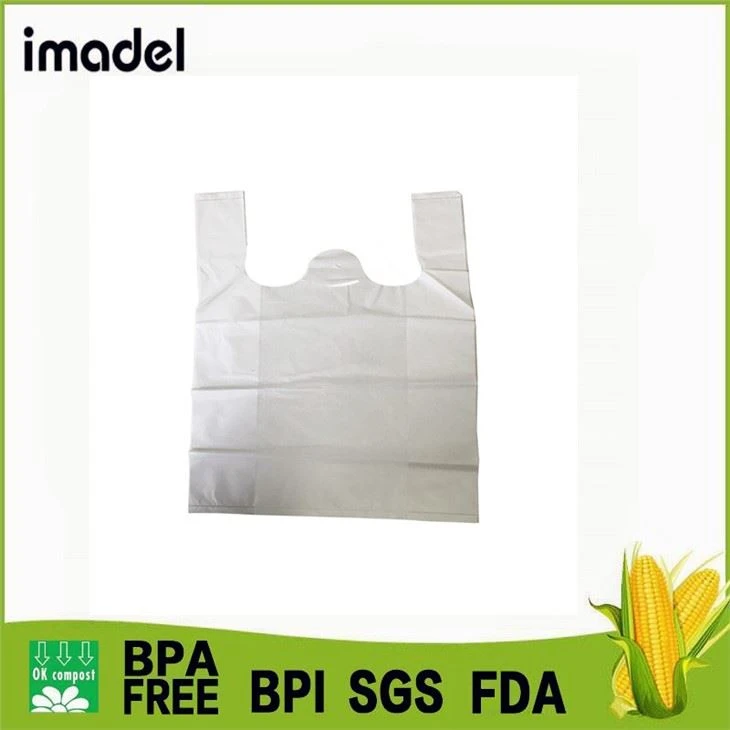
Tips on Composting Your Biodegradable Bags
Cut the Packaging
The bacteria that is in contact with the material which is responsible for it's breakdown, is limited by the surface area, so the easiest way to speed up the process is to cut up the bags. If you are putting the pieces in your compost bin, throw it around like (biodegradable) glitter!
Mix Materials
If you are composting one of my larger bags which is made of two materials (the brown kraft bit and the window), make sure you mix the pieces together. This will agitate the pile and spread the biodegradation process throughout the whole pile rather than it happening in a small area
Be a Big Fan!
If you are composting at home, aerate your pile! Aerobic bacteria, that is the most important for the composting process, requires oxygen to work effectively. In order to allow the oxygen to reach high enough level (around 5%) the entire compost pile must be aerated. You can either buy an aerator or just turn it over again and again, rustling the pile and letting fresh air inside. Otherwise, the oxygen level inside will drop and end up slowing the decomposing process for up to 90%!
Types of Biodegradable Bags: The Difference between Degradable, Compostable and Biodegradable Plastics
Biodegradable Bag
Biodegradable bag is the type of plastic that can be broken down by living things like fungi or bacteria. This type of plastic is made from plant-based materials like corn, potato and wheat starch as opposed to oil-based plastics that are derived from petroleum. When plastic bags are made using biodegradable plastic, the recycling process becomes easier because once the plastic disintegrates and breaks down to smaller pieces, it can then be processed by easily broken down by the bacteria and fungi that are naturally found in the environment which can make a significant different in the impending landfill problem.
Degradable Plastic
Degradable plastics or ‘oxo-degradable' plastic bags are different from biodegradable plastic bags as they don't need living organisms to initiate the breakdown process. In case of degradable plastic bags, the chemical additives used during the manufacturing of said plastic bags allow the plastic bag to break down much at a much quicker rate as compared to that of a regular plastic bag
Compostable Plastic
Compostable plastic bags are also made using a plant material that return to base organic components when processed. And since they are ultimately made of cellulose, no toxic gases are released into the environment when they are decomposing. However, it is important to note that compostable plastic bags need a very specific environment to initiate the decomposition process, a specific mix of gases, the necessary microorganisms and the right temperature which means it requires a specialized processing centre as well.
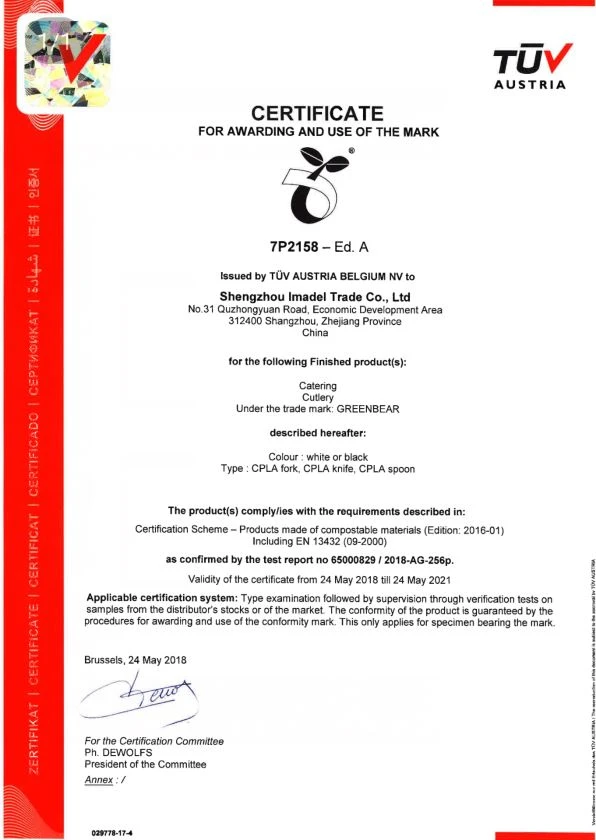
Our Factory
Shengzhou Imadel Trade Co.,Ltd was founded in 2012,is a company specializing in supplying 100% biodegradable and compostable products: CPLA cutlery; Sugarcane plate, bowl and clamshell; bags; paper cup; bamboo cutlery and plate.
FDA,SGS certified for food safty, BPI and EN13432 certified for compost.
And our factory, Zhejiang Imadel Bio-Tech Co.,Ltd is specially in producing the 100% biodegradable and compostable CPLA cutlery.
Our main market is North America, South America, and Europe.
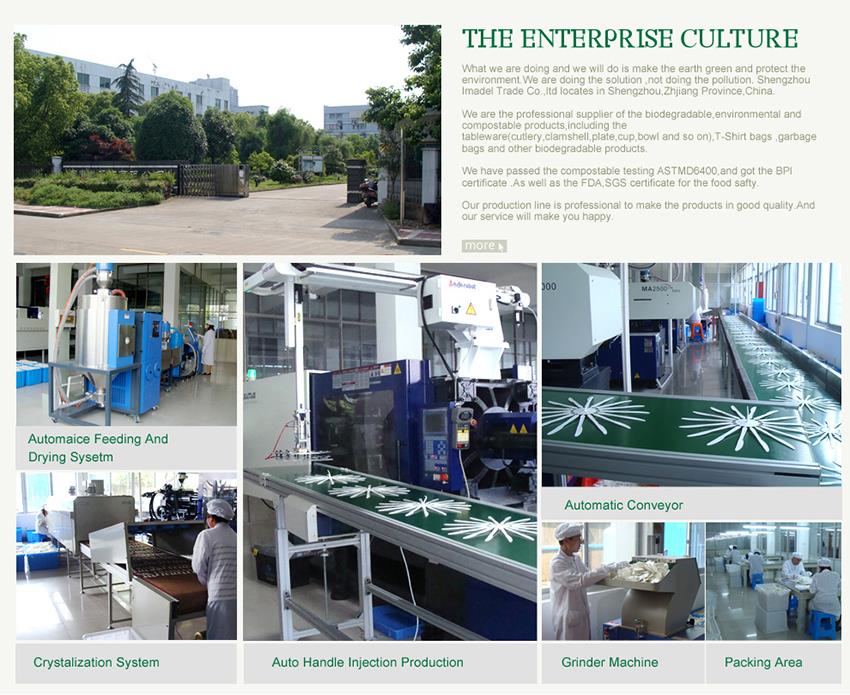
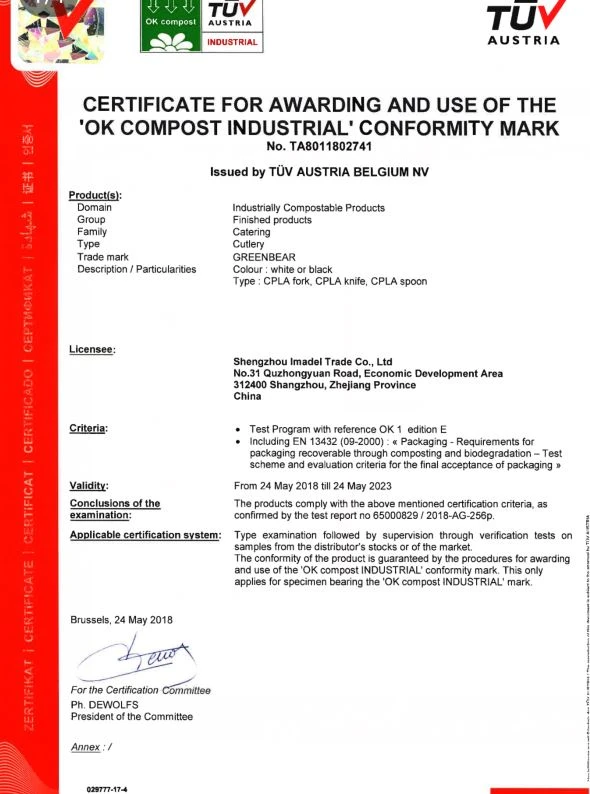
Our Certificate
We have passed the compostable testing ASTMD6400,and got the BPI,EN13432 certification.As well as the FDA,SGS certificates for the food safety.
Our CPLA cutlery passed ASTMD6400 and got the BPI(US standard) in 2013,got the EN13432(EU Standard) in 2018.
FAQ
Q: What are biodegradable bag and how are they used?
Q: Are bio-based plastics always 100% bio-based?
Q: Do bio-based and fossil-based plastics have different chemical structures?
Q: Can bio-based plastic bags be disposed of in the biowaste bin?
Q: Is it important for bio-based plastics to be recyclable?
Q: What is the principle of cascade use in bioplastics?
Q: Can products made of biodegradable bag be disposed of in the biowaste collection?
Q: How long do biodegradable bag take to decompose?
Q: Are biodegradable plastics more expensive than conventional plastics?
Q: Do biodegradable bag release harmful substances during decomposition?
Q: What should I do with biodegradable bags?
Q: How do biodegradable bags break down?
Q: What are the environmental issues of biodegradable bags?
Q: What is the need for biodegradable bags?
Q: How fast do biodegradable bags degrade?
Q: How do you store biodegradable bags?
Q: Can biodegradable bags be burned?
Q: Do biodegradable bags dissolve in water?
Q: What is the difference between compostable and biodegradable bags?
Q: What is the lifespan of biodegradable plastic?
Welcome to wholesale high quality biodegradable bag at competitive price from professional biodegradable bag manufacturers and suppliers in China here. For more information, contact our factory.